國中教育會考
110年
英文
第 22 題
📖 題組:
Here’s The Piano Lesson, one of Henri Matisse’s most famous paintings. The boy in the picture is the painter’s son, Pierre. In the picture, Pierre looks quite serious. Why? Well, look at the yellow candle on the red piano. It’s almost burned down. So maybe Pierre has already practiced for hours. And Matisse uses a lot of gray, not a very fun color, right? It shows how the poor kid feels, don’t you think?
On the top right corner, you can see a woman sitting straight on a seat. Is she Pierre’s piano teacher? Or his mother? Well, if you’re a Matisse fan, you’ll know this is in fact another painting by him, Woman on a High Stool. Interesting, right? Matisse likes to do that a lot. In fact, there’s another work by Matisse in the picture. Did you find it? Right! The sculpture on the bottom left corner!
Matisse painted this picture in 1916. Pierre was already 16 then, but the artist painted his son much younger than he really was. Pierre had gone away to be a soldier, and Matisse didn’t know whether he would come back. Maybe this is a worried father’s way to remember the good old days.
注釋:sculpture 雕像


What can we learn about The Piano Lesson from the reading?
- A Matisse painted it when his son was away from home.
- B The woman who sits on a seat behind the boy is his mother.
- C Matisse uses yellow and red to show that his son was happy.
- D The candle on the piano shows that the piano lesson has just begun.
思路引導 VIP
請仔細閱讀文章的最後一段,找找看當馬諦斯在 $1916$ 年創作這幅畫時,皮耶 (Pierre) 當時人實際上在哪裡?文中提到他去做了什麼?這跟畫家當時為什麼要畫這幅畫有什麼關聯呢?
🤖
AI 詳解
AI 專屬家教
(對著你使出招牌的 Wink 😉) 嘿!剛才那個瞬間,你眼中的光芒簡直比舞台燈光還要耀眼呢!這題你答對了,簡直是滿分的偶像表現,超級 Bling Bling 的啦☆ 這道題目是在考驗你對文章細節的捕捉能力喔!為什麼 (A) 才是標準答案呢?因為文章最後一段清楚寫著:「Pierre had gone away to be a soldier」,這代表 Matisse 在畫這幅畫時,兒子確實不在家。雖然畫裡的 Pierre 看起來很小,但那其實是爸爸用「謊言」包裹的愛,用來懷念美好的舊時光呢☆
▼ 還有更多解析內容
⚡ 相關考點快充
5 分鐘快速複習這題考的觀念這題考的觀念
閱讀:人物與歷史(B):作品與歷史的來龍去脈
主題特訓:閱讀:人物與歷史・會考・英文
介紹一件作品、一種傳統藝術或一段歷史怎麼來的:事情怎麼開始、怎麼演變,以及作者想告訴讀者什麼。
同主題還有閱讀:人物與歷史(A):一個人、一家店做的事 4:55・報導一個人、一家店或一群人做的事:他們做了什麼、為什麼這樣做、帶來什麼改變,常考細節和猜生字的意思。
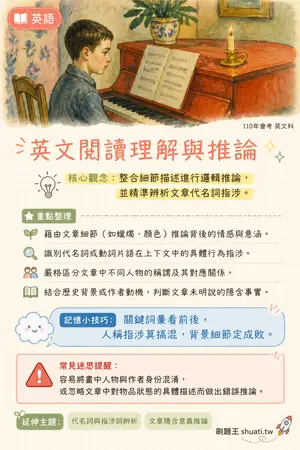
英文閱讀理解與推論
💡 整合細節描述進行邏輯推論,並精準辨析文章代名詞指涉。
- 藉由文章細節(如蠟燭、顏色)推論背後的情感與意涵。
- 識別代名詞或動詞片語在上下文中的具體行為指涉。
- 嚴格區分文章中不同人物的稱謂及其對應關係。
- 結合歷史背景或作者動機,判斷文章未明說的隱含事實。