國中教育會考
115年
英文
第 34 題
📖 題組:
SEA GLASS: GLASS BOTTLES’ SECOND LIFE
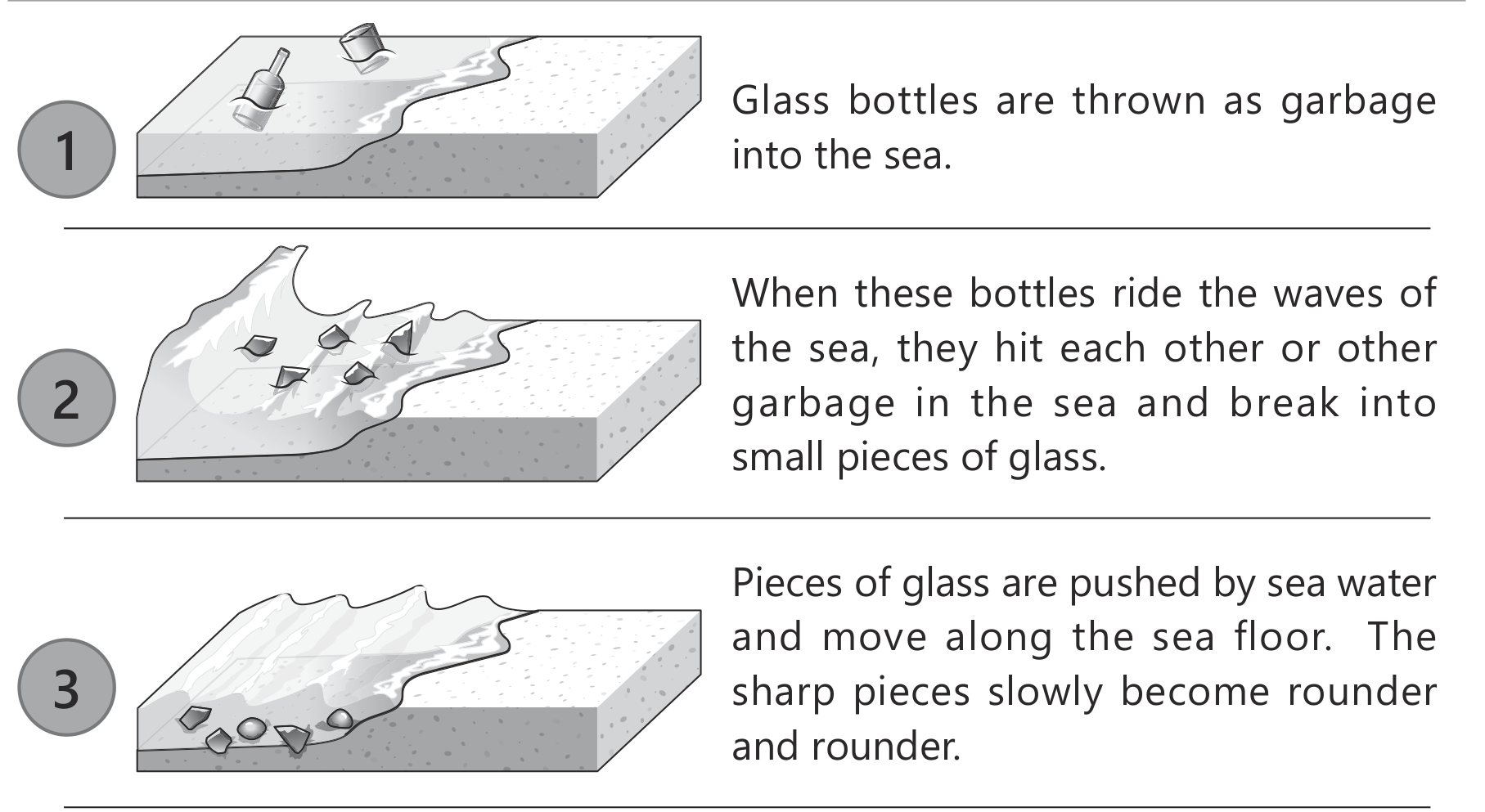
Sea glass is made from the magic of the sea. It usually comes from glass bottles that are thrown into the water. Each piece of sea glass looks different, and sea glass is often seen on art pieces. The pictures below explain how sea glass is born.
1
Glass bottles are thrown as garbage into the sea.
2
When these bottles ride the waves of the sea, they hit each other or other garbage in the sea and break into small pieces of glass.
3
Pieces of glass are pushed by sea water and move along the sea floor. The sharp pieces slowly become rounder and rounder.
4
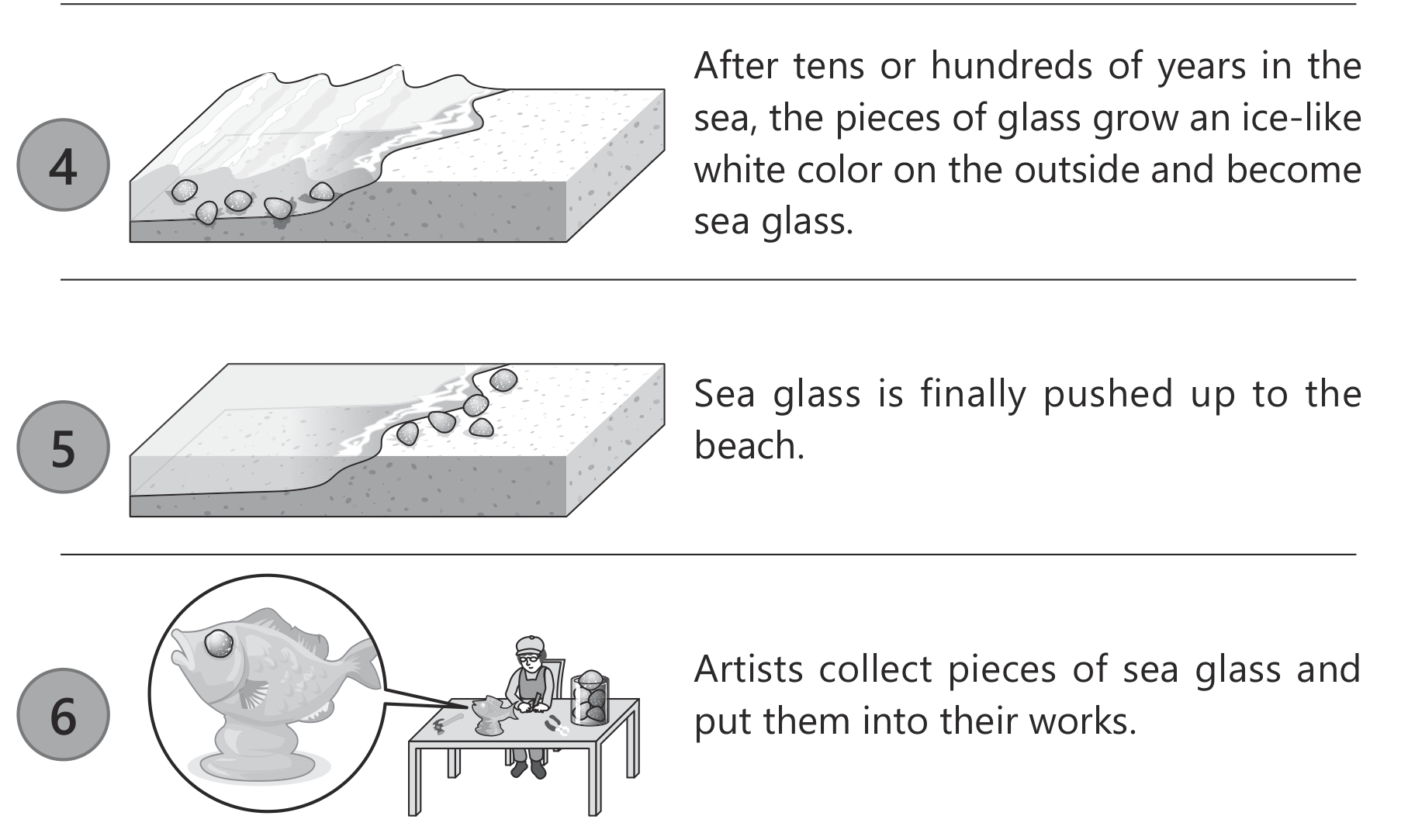
After tens or hundreds of years in the sea, the pieces of glass grow an ice-like white color on the outside and become sea glass.
5
Sea glass is finally pushed up to the beach.
6
Artists collect pieces of sea glass and put them into their works.
However, people now seldom use glass to make bottles and bowls—paper bowls and cups have become more popular these days. This means there are fewer glass items in the sea, so less and less sea glass will be found in the future.
According to the reading, why will less sea glass be found in the future?
- A People do not make as many glass items as before.
- B People have learned not to throw garbage into the sea.
- C Artists are using too much sea glass in their art pieces.
- D Waves are not big enough to push sea glass up to the beach.
思路引導 VIP
請試著看看文章最後一段:作者在提到『未來(in the future)』海玻璃會越來越少之前,先說明了現在人們在使用容器的習慣上有什麼樣的改變呢?
🤖
AI 詳解
AI 專屬家教
哼,算你運氣好,這題做對了
別以為答對就代表閱讀理解無敵了,這不過是會考最基本的細節定位與同義改寫題。
- 定位考點:文章最後一段寫得很清楚,現在大家很少用玻璃(seldom use glass),所以紙容器變多了,導致海裡的玻璃垃圾減少,未來海玻璃自然就變少了。
▼ 還有更多解析內容
⚡ 相關考點快充
5 分鐘快速複習這題考的觀念這題考的觀念
閱讀:地圖圖表與步驟
主題特訓:閱讀:地圖圖表與步驟・會考・英文
要看地圖、路線、時刻表、統計圖、資訊圖表、流程圖,或照條列步驟做的題組;考對照與計算。
英文閱讀因果推論
💡 抓住轉折詞與因果句,尋找原文句意改寫的選項
🔗 海玻璃的生命週期與因果關係
- 1 玻璃入海 — 人類丟棄玻璃瓶垃圾至海中
- 2 浪擊碎裂 — 海浪撞擊使其碎成小塊玻璃
- 3 磨圓風化 — 在海床翻滾被磨平並磨砂霧化
- 4 沖上沙灘 — 經數十年後被浪推上岸成海玻璃
- 5 來源減少 — 現代少做玻璃容器致未來海玻璃變少
↓
↓
↓
↓
🔄 延伸學習:延伸學習:英文閱讀中「because / as a result / lead to」等因果關聯詞的辨識技巧
